AI

BLOG

【レーザ応用】大規模言語モデルの画像生成AIを使ってみる

はじめに

ChatGPT に代表される大規模言語モデルが大変注目されています。AI(人工知能)は、従来も何度かブームがありました。しかし、ブームで終わり徐々に注目されなくなり、実使用上もあまり効果を上がてきませんでした。
しかし、昨今注目されている大規模言語モデルは、少々様子が異なるようです。従来よりずっと高い精度で結果を出し、プロンプトと呼ばれる対話型のコマンドでまるで人間と会話しているように回答を導き出すことができます。
しかも、実用上で有効な結果も出しており長く使われるかもしれません。逆に、あまりにも精度が高いため、フェイクニュースとして使えれるなど、懸念点も多いことから多くの国で監視することも検討されています。
ここでは、大規模言語モデルを使ってできる画像生成の実力を試してみます。

マニアックなレーザー微細加工の画を出せるか!?

レーザーは、広く認知され、加工ツールとしての利用も進んでいますが、レーザー微細加工となると、その市場はまだまだ限られています。
そんなニッチな分野の画を画像生成AIは描けるのでしょうか?

画像生成AIの代表と言えば、Stable Diffusion です。こちらで画を描いてもらいましょう。

まだまだ、英語のプロンプトの方が高い精度を実現できるため、英語のプロンプトを使います。
高速に微細穴を加工できる加工装置を描いてもらいましょう。
プロンプトはこちら
“`
Laser processing system which is able to drill small hole with high speed
“`

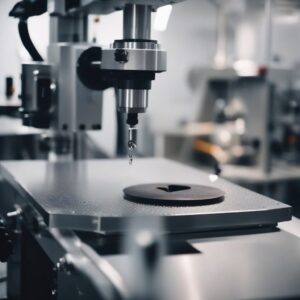
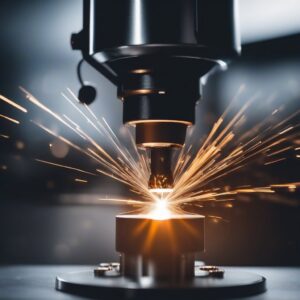
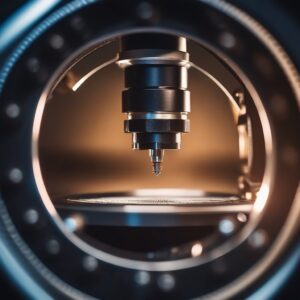
そして、出された画がこちら。
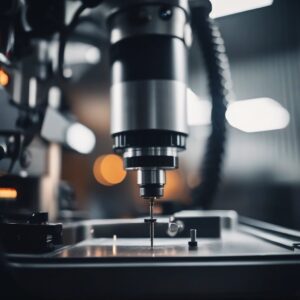

非常にリアルな画を出しました。しかも、精密な機器っぽいです。間違いなく何かのツールと言えます。
が、よく見るとやっぱりどうも変ですね。分かる人が見たら、明らかにおかしいところがいっぱいです。

さいごに

やなり、あまりにもニッチな業界には対応できないようです。
しかし、細部を覗けば、なかなかいい画を書いてくれます。
今後も継続して、仕事に役立つ画を描いてもらうように検討していきます。
【レーザ応用】レーザで何ができる?ChatGPTはわかる?

概要

ChatGPT に代表される大規模言語モデルが実用されていますが、レーザについても詳しいでしょうか?具体的な使い方を聞いてみました。

やってみた

ChatGPT は英語でプロンプトを描いた方が精度が良いと思いますので、英語で聞いてみます。ファイバーレーザと半導体レーザを使って何ができるかを聞いてみました。
こちらがプロンプトです。

“`
Fiber laser is inexpensive and powerful one widely used in industry. Semiconductor, on the other hand, is able to be controlled its power precisely. What can we do with using both lasers?
“`

こちらが ChatGPTからの回答です。

“`

Combining fiber lasers and semiconductor lasers can offer a range of benefits in various industrial applications. Here are some possibilities:

  1. Material Processing:
    • Cutting: Fiber lasers are known for their high power and efficiency in cutting various materials like metals and plastics. Combining them with semiconductor lasers allows for precise control of the cutting process, enabling intricate and fine cuts.
    • Welding: Fiber lasers can provide the necessary power for welding applications, while semiconductor lasers can control the heat input and penetration depth, resulting in high-quality and controlled welds.
    • Marking and engraving: Fiber lasers can create deep and permanent marks on materials, and semiconductor lasers can help control the intensity and accuracy of these markings, making them suitable for applications like product branding and serial number engraving.
  2. Medical Applications:
    • Medical cutting and surgery: Combining fiber lasers for the cutting process with semiconductor lasers for precise tissue ablation allows for minimally invasive surgeries and greater control during medical procedures.
    • Therapeutic applications: Semiconductor lasers, particularly diode lasers, are used in various medical therapies, such as photodynamic therapy and laser therapy for skin treatments. Fiber lasers can complement these therapies by providing high-power output.
  3. Communication:
    • Fiber optics: Fiber lasers are used as light sources in optical communication systems. Semiconductor lasers can modulate the fiber laser output for data transmission, making them an integral part of high-speed internet and telecommunication systems.
  4. 3D Printing and Additive Manufacturing:
    • Fiber lasers can be used to sinter or melt metal powders in 3D printing processes. Semiconductor lasers can precisely control the energy input to ensure uniform and accurate printing.
  5. Sensing and Metrology:
    • Combining the stability and precision of semiconductor lasers with the power and long-distance capabilities of fiber lasers can enhance applications in LIDAR (Light Detection and Ranging) systems, interferometry, and other sensing technologies.
  6. Scientific Research:
    • Combining both lasers can be valuable in various research applications, such as spectroscopy, where fiber lasers provide a stable and high-power light source, and semiconductor lasers help fine-tune the wavelength for specific experimental requirements.
  7. Defense and Security:
    • In military and security applications, a combination of fiber lasers for long-range targeting and semiconductor lasers for precision guidance can improve the accuracy of laser-guided systems, such as laser rangefinders or missile guidance systems.

In summary, the integration of fiber lasers and semiconductor lasers offers a versatile platform for a wide range of industrial, medical, communication, research, and defense applications. By leveraging the strengths of both technologies, you can achieve a balance between high power and precise control, leading to enhanced performance and efficiency in various fields

結果を見てみると、きちんと考えているようです。ただ、内容が薄いようです・・・・。この辺りは、やはり人間が考えていくしかないですね。

最後に

ChatGPT は、視野を広げるアイデアを出してくれる可能性がありそうです。しかし、実際の中身は人間がしっかりと開発していく必要がありそうです。

【レーザ】ChatGPT に聞いた! レーザーの原理

今、流行りのChatGPTにレーザの原理を聞いてみました。英語の方が精度の良い答えがでるようですので、英語で質問しました。 プロンプトはこちら

you are a specialist of laser. please explain how laser works.
そして、得られた回答がこちら
Certainly! I'd be happy to explain how a laser works.

The term "laser" stands for "Light Amplification by Stimulated Emission of Radiation." It is a device that produces an intense, narrow beam of light with specific properties. The working principle of a laser involves three essential components: an active medium, a pump source, and an optical resonator.

Active Medium: The active medium is a material capable of producing laser light. It can be a solid, liquid, or gas. Different types of lasers use different active mediums. For example, solid-state lasers use crystals or glasses, gas lasers use mixtures of gases, and semiconductor lasers use specially designed semiconductor materials.

Pump Source: The pump source supplies energy to the active medium, exciting its atoms or molecules to a higher energy state. This energy input "pumps" the active medium to create a population inversion, where more atoms or molecules are in the higher energy state than the lower energy state. Common pump sources include flash lamps, electrical discharges, or other lasers.

Optical Resonator: The optical resonator consists of two mirrors placed at opposite ends of the active medium. One mirror is fully reflective, while the other is partially reflective, allowing a portion of the light to escape. The mirrors form a resonant cavity that traps and reflects light back and forth through the active medium.

Now, let's walk through the process of laser operation:

Pumping: The pump source energizes the active medium, raising the majority of its atoms or molecules to the higher energy state. This establishes the population inversion, with more particles in the excited state than the ground state.

Stimulated Emission: When a photon of the correct energy interacts with an excited atom or molecule, it triggers stimulated emission. This means that the excited particle emits a new photon that is identical to the incoming photon in terms of energy, phase, and direction. This process amplifies the initial photon.

Reflection and Feedback: The photons produced by stimulated emission bounce back and forth between the mirrors in the optical resonator. Each time they pass through the active medium, they stimulate the emission of more photons with the same properties, resulting in an exponential increase in the number of photons.

Laser Output: The partially reflective mirror allows a small portion of the photons to escape from the resonator, forming the laser beam. The escaped photons are coherent, meaning they have a fixed phase relationship and travel in a tightly focused, parallel beam.

Key properties of laser light include its high intensity, monochromaticity (single wavelength), coherence (well-defined phase relationship), and directionality.

Lasers have numerous applications, ranging from scientific research and medical procedures to telecommunications, manufacturing, and entertainment.

I hope this explanation helps you understand the basic principles of how lasers work!
良く知っていますね。これだけ答えられるとバッチリですね。

【加工】微細レーザ溶接とAI(人工知能)の融合がもたらす製品製造の革新

はじめに

ChatGPT に代表される「生成AI」が非常に注目を集めています。人間と自然に対話するような回答を得られ、市民権を得ているように見えます。これは、大規模言語モデルという膨大なデータによる学習のたまもので、その学習は継続してすすめられ、より高度なモデルもリリースされています。

このような、AIを使って、製造業は変わるのでしょうか?どのようなメリットがありそうでしょうか?そのあたりを ChatGPT と会話することで探ってみたいと思います。

レーザとAI

製造業は、技術の進化により大きな変革を遂げてきました。その中でも、微細レーザー溶接とAI(人工知能)の組み合わせは、製品製造における新たな可能性を切り拓くと期待されます。この組み合わせによって、製品の自動化、品質向上、予知保全などの特長が実現され、効率的で高品質な製品製造が可能となりました。本記事では、微細レーザ溶接とAIの融合による製品製造の革新について詳しく探っていきます。

  1. 自動化と効率化: AIの能力を利用することで、製品製造プロセスの自動化と効率化が実現されます。AIは大量のデータを解析し、レーザ溶接の最適なパラメータや製品の品質に影響を与える要素を把握します。これにより、製造ラインの監視や制御をリアルタイムに行い、生産効率を最大化することができます。また、AIは学習能力を持つため、継続的な改善や最適化を行いながら、より効率的な製造プロセスを実現することができます。
  2. 品質向上と欠陥検出: 微細レーザ溶接においては、微小な欠陥や不良箇所の検出が重要です。AIは高度なパターン認識や機械学習のアルゴリズムを活用して、製品の品質向上と欠陥検出に貢献します。大量のデータを分析し、製品の異常を迅速に検出することで、製品の品質を向上させることができます。さらに、AIは常に学習し続けるため、製品の製造プロセスにおける微細なパラメータの調整や改善を実施することが可能です。
  3. 予知保全とメンテナンス: AIの能力を活用することで、微細レーザ溶接装置の予知保全とメンテナンスを行うことができます。AIはセンサデータやプロセスデータをリアルタイムで監視し、異常なパターンや故障の兆候を検出します。これにより、機器のトラブルや停止を予測し、適切なメンテナンスを行うことで生産ラインの停止時間を最小限に抑えることができます。また、予知保全によるメンテナンス計画の最適化により、生産設備の寿命を延ばし、製品の安定供給を確保することができます。

まとめ

微細レーザ溶接とAIの融合による製品製造の革新は、自動化、品質向上、予知保全などの面で大きな利点をもたらします。AIの能力を活かしながら、レーザ加工技術を統合することで、製品製造業界はより効率的かつ革新的な方法で製品を生み出すことが可能となります。今後の技術の進化とAIの発展に期待しながら、製品製造業界の未来はさらなる進化と革新に向けて進んでいくことでしょう。

さいごに

以上は、AIと共同で生成した文章です。詳細までは記述できていませんが、大筋では正しいことを説明しているようです。この記事は、AIとレーザの融合を探る試験のようなものですが、現実世界でもレーザとAIの融合は、すぐそこまで来ているように感じます。